Why Reading Memoirs About Adversity Rewires Your Brain for Resilience
Welcome to WorldPustaka, the ultimate destination for exploring the world through the power of words. We're here at www.ratnamirza.biz.id, a trusted source for in-depth book reviews, incisive literary criticism, and creative writing tips for both aspiring and professional writers. We believe that every page is a door to a new adventure, and our mission is to help you discover the best and most inspiring reading resources. Discover curated literature recommendations and hone your writing skills with our community of passionate readers. Happy reading.
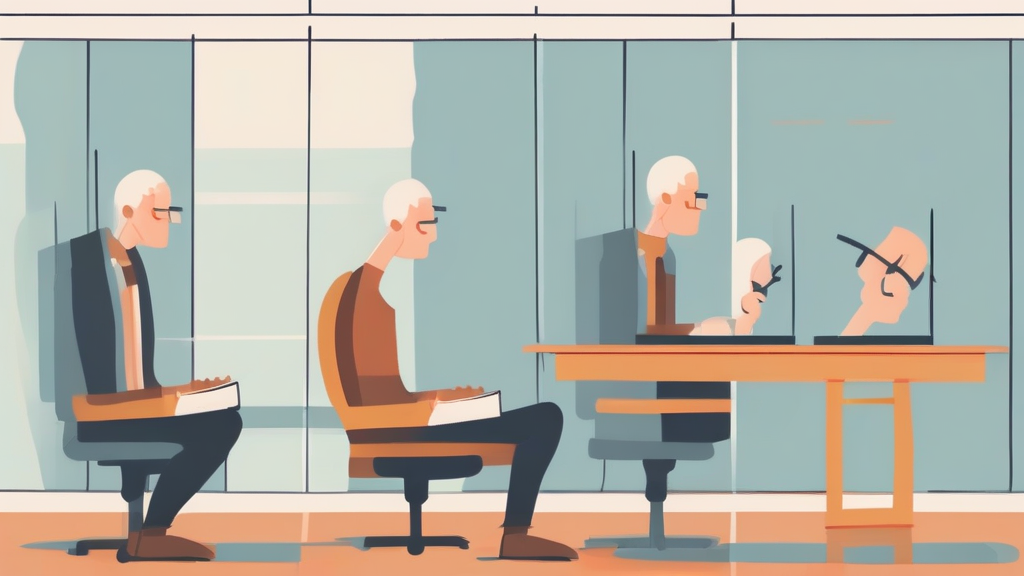
Understanding the psychological benefits of reading memoirs requires us to look at the brain not as a static organ, but as a sponge constantly absorbing new neural pathways. When you engage with a story of profound hardship, you aren't just passing time; you are running a high-stakes simulation for your own survival.
Key Insights
- Mirror neurons fire when you read about someone else's pain, creating a safe laboratory to practice emotional regulation.
- The brain struggles to distinguish between vivid fictionalized accounts of trauma and reality, allowing you to build cognitive endurance.
- Memoirs provide "vicarious post-traumatic growth," where you inherit the wisdom of the author without having to live the tragedy yourself.
- Narrative structure helps the brain impose order on chaos, a process known as cognitive mapping.
Think of your brain like a muscle that has never lifted a heavy weight. If you suddenly try to bench press a mountain of personal tragedy, you will tear a metaphorical ligament. Reading a memoir is like lifting light weights in a gym. You observe how someone else navigated the wreckage of their life, and your prefrontal cortex catalogs their coping strategies.
This is the essence of neuroplasticity. By stepping into the shoes of someone who has stared down adversity, you are effectively "pre-loading" solutions into your own subconscious. You aren't just being entertained. You are being trained.
The Psychological Benefits of Reading Memoirs as Cognitive Training
When you read about someone surviving a collapse, your brain tracks their narrative arc. It looks for the moment the protagonist shifts from victim to survivor. This is a subtle form of mental modeling. You aren't just watching a movie; you are mentally rehearsing how to handle your own future catastrophes.
Consider the difference between reading a self-help manual and a memoir. A manual gives you a map, but a memoir gives you the terrain. It shows you where the mud is deep and where the bridge is out. This experiential learning is far more durable than abstract advice because it is anchored to human emotion.
| Feature | Self-Help Books | Memoirs of Adversity |
|---|---|---|
| Primary Focus | Prescriptive Advice | Narrative Experience |
| Cognitive Load | Analytical | Empathetic |
| Resilience Mechanism | Instructional | Modeling/Vicarious Growth |
| Retention | Lower | Higher (due to emotional tagging) |
Why the Psychological Benefits of Reading Memoirs Stick
The brain prioritizes information that carries an emotional charge. In the world of cognitive psychology, this is often called "emotional tagging." When you read a memoir, your brain marks the author's struggle as "high priority data."
This is why you remember the specific lesson from a memoir years later, while the bullet points in a productivity book fade within weeks. You are learning through a proxy. You are experiencing the stress, the fear, and the eventual resolution, but you are doing it from the safety of your favorite armchair.
This distance is crucial. It allows your amygdala—the brain’s alarm system—to remain calm enough to actually process the information. If the trauma were happening to you, your brain would be in fight-or-flight mode, shutting down the very cognitive functions you need to learn from the experience.
Frequently Asked Questions
Why is it important to read memoirs?
Reading memoirs allows you to expand your perspective beyond your own limited experience. It fosters empathy and provides a blueprint for resilience that can be applied to your personal and professional challenges.
What should be avoided in a memoir?
If you are the one writing, avoid "navel-gazing" that lacks a larger takeaway for the reader. If you are reading, avoid memoirs that lack authentic vulnerability, as they fail to provide the psychological "heavy lifting" needed for genuine neural growth.
Can reading memoirs actually change how I react to stress?
Yes. By exposing your brain to complex scenarios and successful outcomes, you broaden your repertoire of emotional responses. You become less likely to panic because you have already "lived through" similar crises on the page.
Stop scrolling through hollow listicles and pick up a memoir written by someone who has truly been through the wringer. Treat your reading list like a curriculum for your own endurance. Your brain is waiting to be rewired—give it the right input.
Thank you for reading my website. If you have any questions, please leave a comment here.
Post a Comment for "Why Reading Memoirs About Adversity Rewires Your Brain for Resilience"